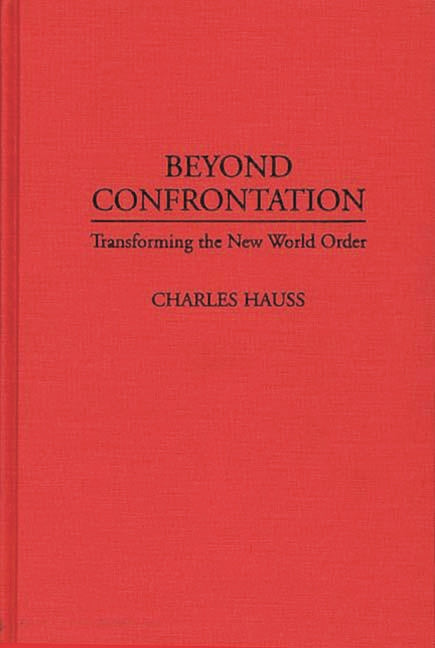
Beyond Confrontation: Transforming the New World Order


Beyond Confrontation: Transforming the New World Order
Beyond Confrontation: Transforming the New World Order
Member Benefits
 30% Off All Books - Savings that support storytellers, not stock prices.
 Fight Book Bans - Book profits fund the Rainbow Book Bus, getting banned books to LGBTQ+ youth.


Member Book Price
$58.33
$40.84
Couldn't load pickup availability
Description
Description
This book presents confrontation as the key theme of the post-cold war world. It argues that the world could be changed dramatically for the better if people and governments were to adopt a new way of thinking and dealing with conflict that takes us beyond confrontation. The examples of war, international economics, environmental decay, and racial conflict show that in today's interdependent world, the problems we face are interdependent too. The central tenet is that it is almost always more pragmatic to act cooperatively. Most important, the book shows that cooperative problem solving is not mere pie in the sky idealism.
About the Author
About the Author
CHARLES HAUSS, the author of four other books, is a member of the Public and International Affairs Department at George Mason University and is also currently Visiting Research Fellow and Professor at the University of Reading (UK).
Critical Reviews
Critical Reviews
..."The author concludes that the traditional win-lose approach to conflict resolution is counterproductive and in the face of global interdependence shortsighted and dangerous. Instead, we must focus on win-win outcomes in which all parties benefit. This is not only rational but smart policy. The book presents a good summary of existing literature on the issues of conflict and conflict resolution. Recommended for upper-division undergraduate and graduate courses."-Choice
?...The author concludes that the traditional win-lose approach to conflict resolution is counterproductive and in the face of global interdependence shortsighted and dangerous. Instead, we must focus on win-win outcomes in which all parties benefit. This is not only rational but smart policy. The book presents a good summary of existing literature on the issues of conflict and conflict resolution. Recommended for upper-division undergraduate and graduate courses.?-Choice
.,."The author concludes that the traditional win-lose approach to conflict resolution is counterproductive and in the face of global interdependence shortsighted and dangerous. Instead, we must focus on win-win outcomes in which all parties benefit. This is not only rational but smart policy. The book presents a good summary of existing literature on the issues of conflict and conflict resolution. Recommended for upper-division undergraduate and graduate courses."-Choice
Publishing Information
Publishing Information
Publisher:
Bloomsbury Publishing PLC
Pub date:
1996-05-14
Length:
264 pages

The Allstora Membership
Membership Perks:
- Save 30% on all online store purchases
- Exclusive access to author's content
- You pay less, but authors still earn double
Membership Terms:
First Month:
$0.00
Monthly price:
$5.00
- To access membership discount simply log in and add to cart, discount applied automatically.
- One month free trial, cancel anytime. Membership renews on the 15th of each month.