The Nocebo Effect: When Words Make You Sick


The Nocebo Effect: When Words Make You Sick
The Nocebo Effect: When Words Make You Sick
Member Benefits
 30% Off All Books - Savings that support storytellers, not stock prices.
 Fight Book Bans - Book profits fund the Rainbow Book Bus, getting banned books to LGBTQ+ youth.


Couldn't load pickup availability
Description
Description
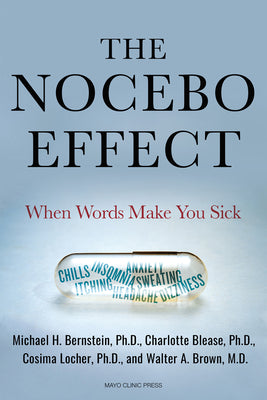
An investigation of the nocebo effect--the placebo effect's evil twin.
"The nocebo effect" is a phenomenon best summarized as the occurrence of a harmful event that stems from consciously or subconsciously anticipating it. The most recent and massive demonstration of the nocebo effect was found with the claims of COVID vaccine side effects, where a significant portion of these side effects were not actually caused by the vaccine. Instead, they were the result of our negative expectations, the so-called nocebo effect.
There are myriad other examples throughout history, and recent studies have documented the critical role of the nocebo effect in treatment side effects--such as with statins for high cholesterol, the higher incidence of complaints after negative media reports of certain medicines, and the mysterious illnesses associated with the Havana Syndrome, during which dozens of US government employees fell ill after reportedly being exposed to an unidentified sound wave.
We are just discovering the power behind this effect, as explored in the groundbreaking work of a dozen top level researchers. Most importantly, researchers have investigated strategies that can be adopted by both clinicians and patients to reduce the nocebo effect.
In turns enlightening and informative, The Nocebo Effect is the first book to investigate this fascinating phenomenon, and offers a wide variety of topics and angles, by the foremost researchers in this emerging field.
12.7 billion doses of the COVID vaccine have been administered around the world, with nearly 613 million doses in the United States alone. Unfortunately, the vaccine has not been universally accepted, often as a result of the side-effects of the vaccine that were widely discussed in news outlets and amplified by social media, relaying anecdotes of people feeling sick after getting jabbed. But lost in this discussion of side effects, and ignored by the CDC, vaccine experts and the media, is the inconvenient fact that a significant portion of these side effects were not actually caused by the vaccine. Instead, they were the result of our negative expectations, the so-called nocebo effect. "The nocebo effect" stems from the Latin word nocere, which translates roughly as "to harm" and can be best summarized as the occurrence of a harmful event that stems from consciously or subconsciously anticipating or expecting it. We are just discovering the power behind this phenomenon, as explored in the groundbreaking research of a dozen top level researchers. While there has never before been such a massive demonstration of the nocebo effect as with the COVID vaccine, there are myriad other examples throughout history, and recent studies have documented the critical role of the nocebo effect in treatment side effects--such as with statins for high cholesterol--and the psychological and social processes that produce these effects, such as the higher incidence of complaints after negative media reports of certain medicines, all the way to the illnesses associated with the Havana Syndrome, during which dozens of US government employees fell ill after reportedly being exposed to an unidentified sound wave, and the recent media coverage of bed bug infestations in Paris. Most importantly, researchers have investigated strategies that can be adopted by both clinicians and patients to reduce the nocebo effect.In turns enlightening and informative, The Nocebo Effect is the first book to investigate this fascinating phenomenon, and offers a wide variety of topics and angles, by the foremost researchers in this emerging field.
About the Author
About the Author
Critical Reviews
Critical Reviews
Publishing Information
Publishing Information
The Allstora Membership
Membership Perks:
- Save 30% on all online store purchases
- Exclusive access to author's content
- You pay less, but authors still earn double
Membership Terms:
- To access membership discount simply log in and add to cart, discount applied automatically.
- One month free trial, cancel anytime. Membership renews on the 15th of each month.